Archive for the ‘recipes’ Category

Making Marmalade

Monday, January 10th, 2011

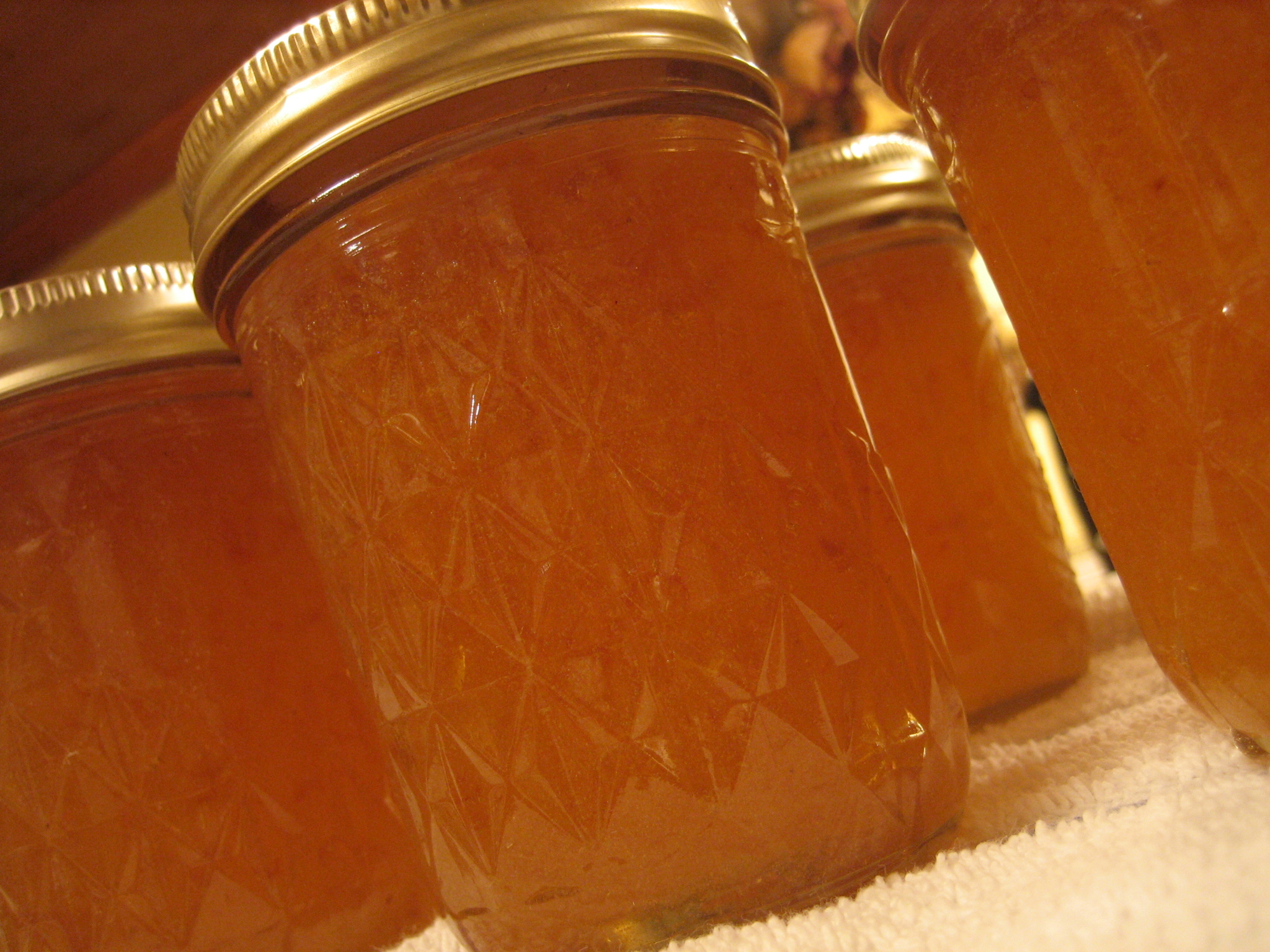
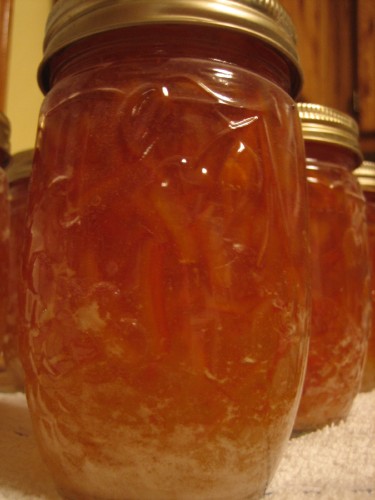
Jar of orange marmaladeIn 2006 I began a New Year tradition in my household: making orange marmalade from scratch, a process that’s fairly labor intensive but that results in some of the best marmalade that I and – to hear from my friends, neighbors and acquaintances who’ve gotten a jar – everyone else around me has ever had. No need to be humble about it I guess, since most of it is the work of Mother Nature.

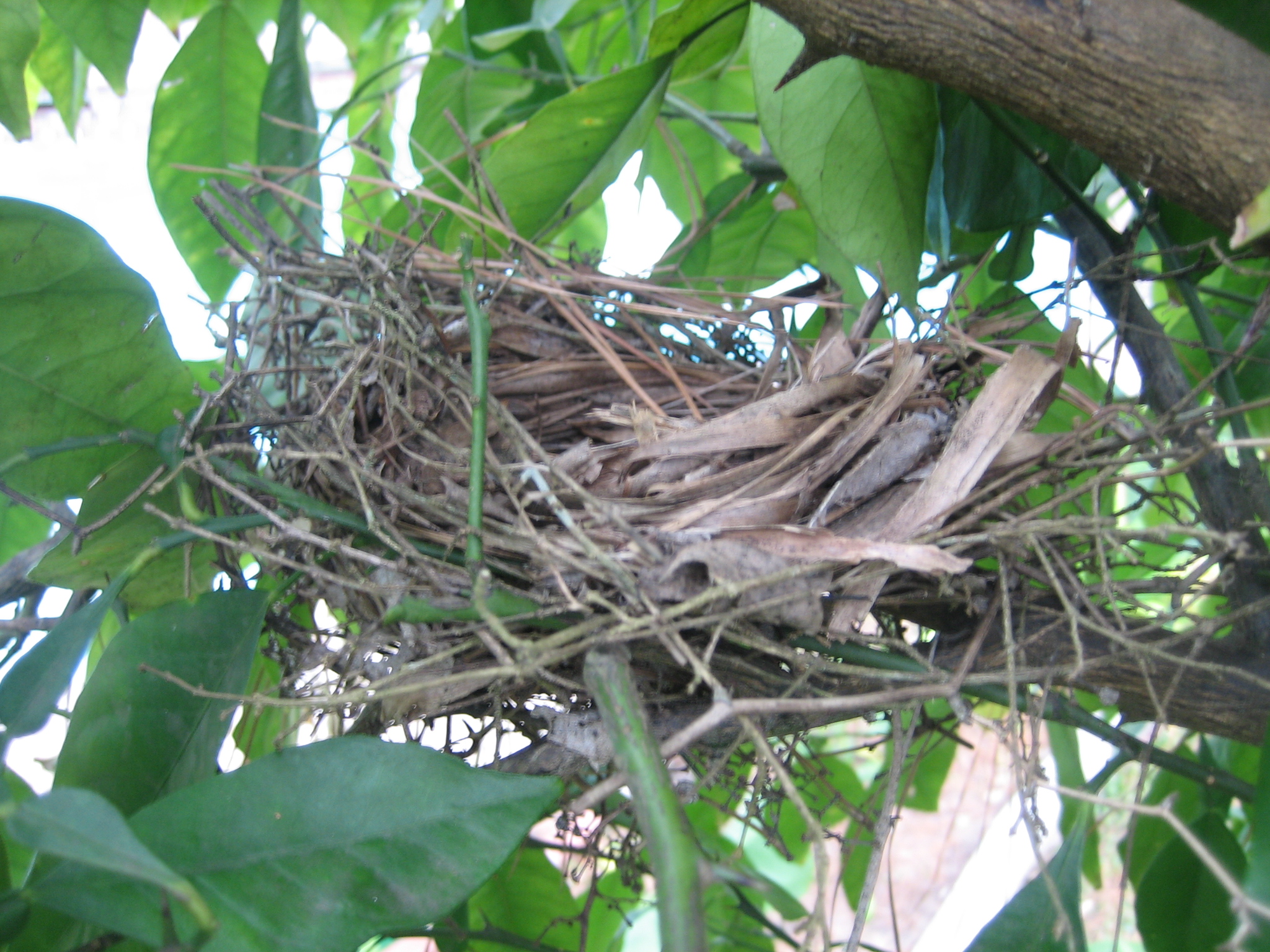
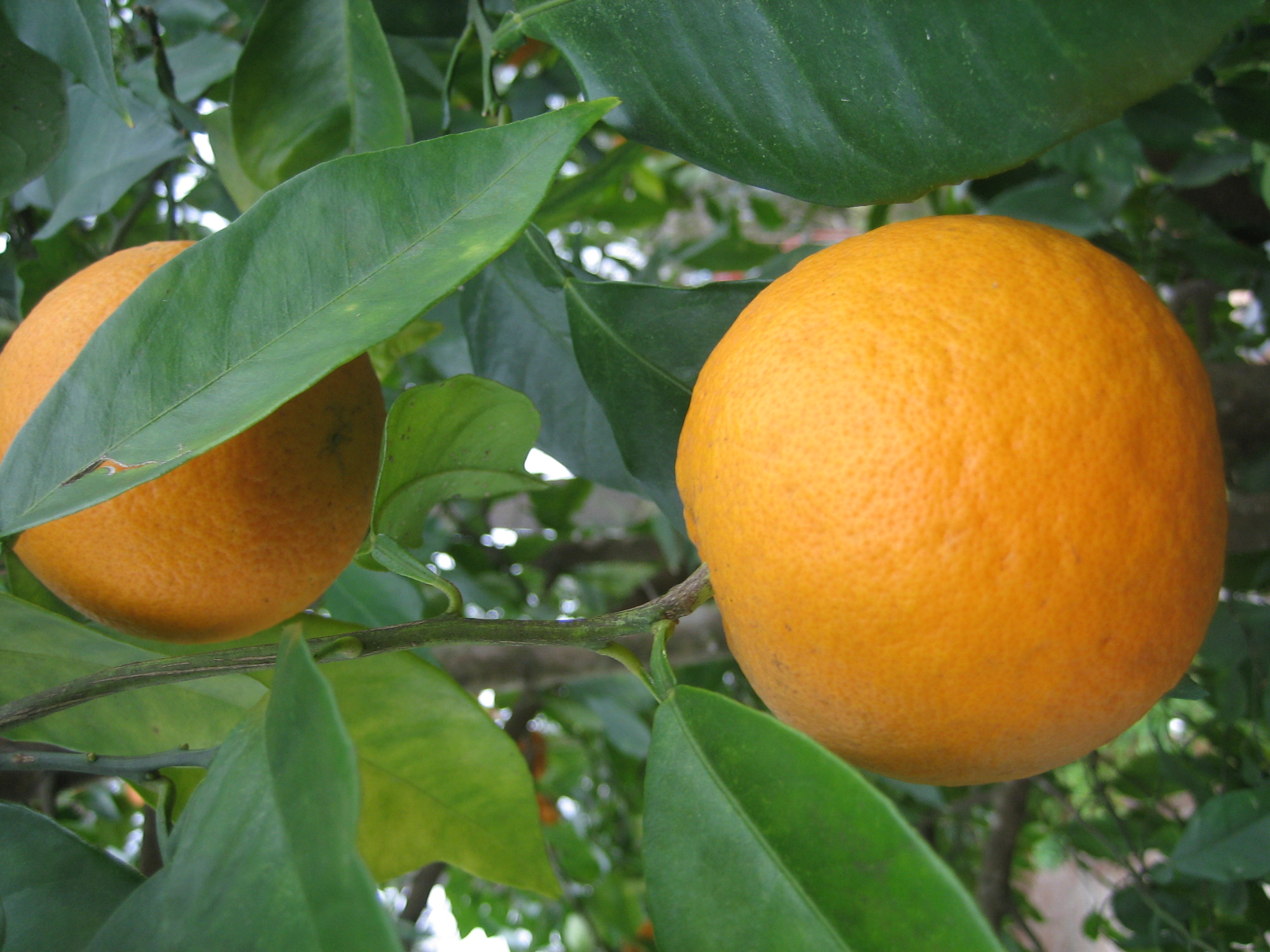
It all started when a tree in my parent’s new garden suddenly bloomed one spring with an abundance of fragrant flowers, nearly a decade after they’d purchased the property. Whether the tree had been planted there deliberately by the previous owners or accidentally sprouted from a carelessly tossed seed we’ll never know, but my parents were delighted to see the blossoms turn into oranges over the course of the summer, fall and winter.

They weren’t so delighted when they actually tasted one.

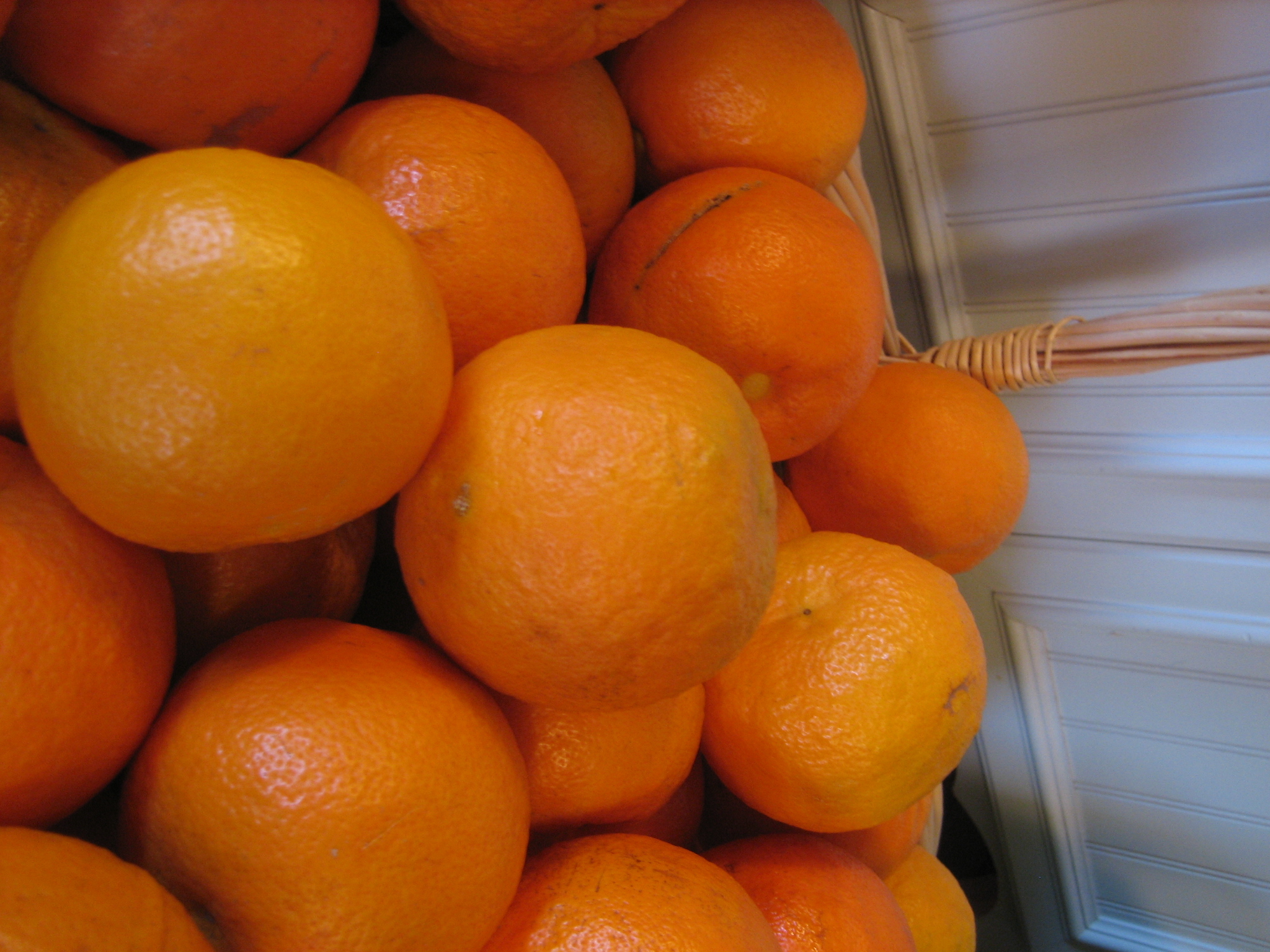
The tree may very well be a Seville orange tree, famous for its fabulously sour fruit. Inedible out of hand, sour oranges are perfect for making traditional marmalade, so I picked a few armloads of fruit that first year and experimented at home with recipes found on the Internet. The tree itself has continued to produce fruit prodigiously and every year, when I return home to visit my parents for the holidays, we pick them all.

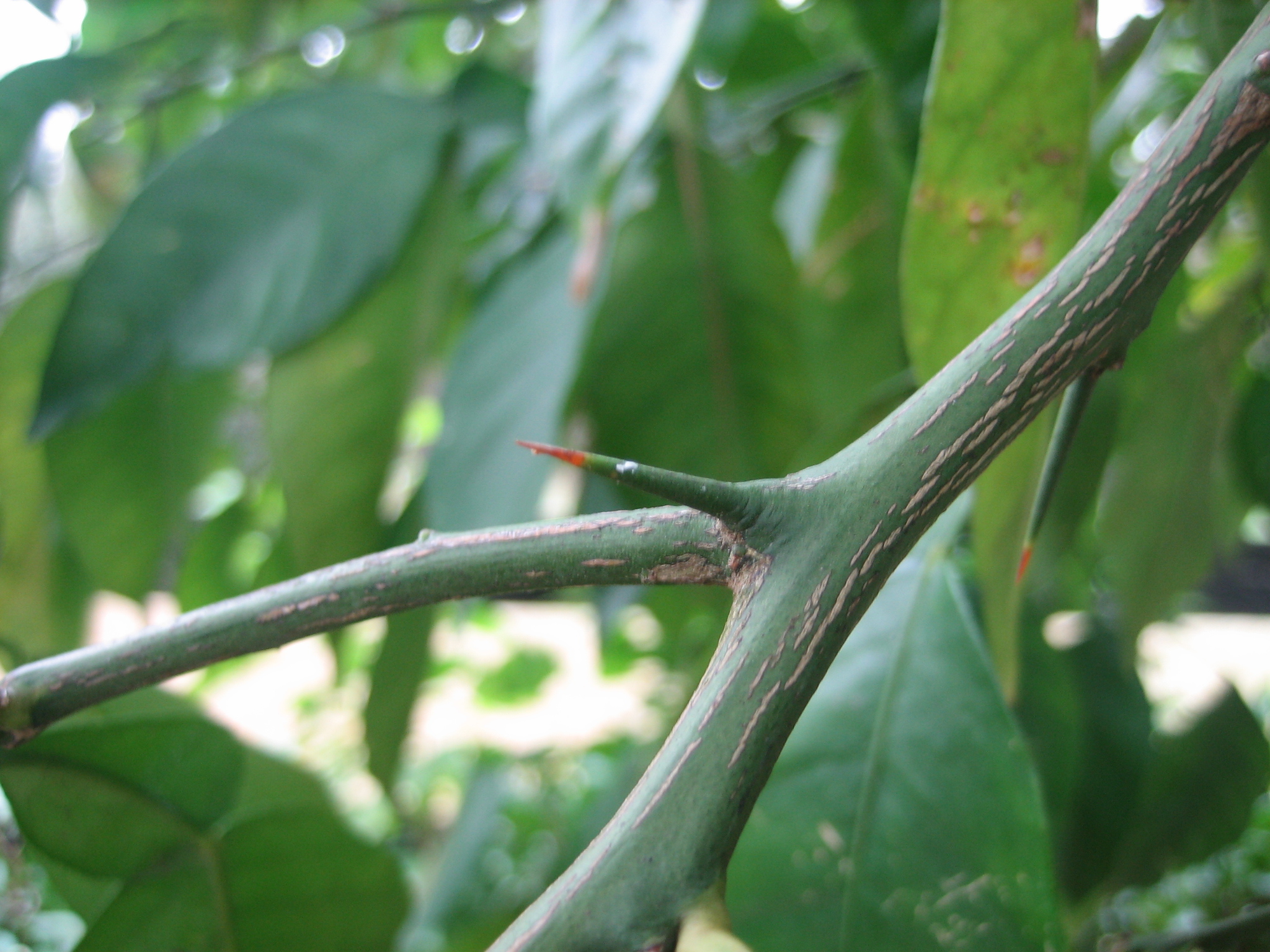
The fruit themselves are heavy. Really, really heavy. They look like ordinary oranges you’d find in the grocery store but the skins and pith are thick, the insides full of seeds and juice. They weigh nearly three times as much as you’d expect a normal orange to weigh. In fact, the fruit is so heavy that it bends most of the branches of the tree down to within easy reach. We all quickly learned, however, that the more fruit we picked, the lighter the branches got. Soon they’d lifted out of reach and we had to figure out how to get the rest of the oranges off the top of the tree. The second year we left almost half of the fruit unpicked simply because it was out of reach, even with the aid of a ladder.  Today it’s a quick and easy process involving a ladder, a pruning pole, shears and three people. Thick work gloves are necessary too because of the nasty thorns on the tree.

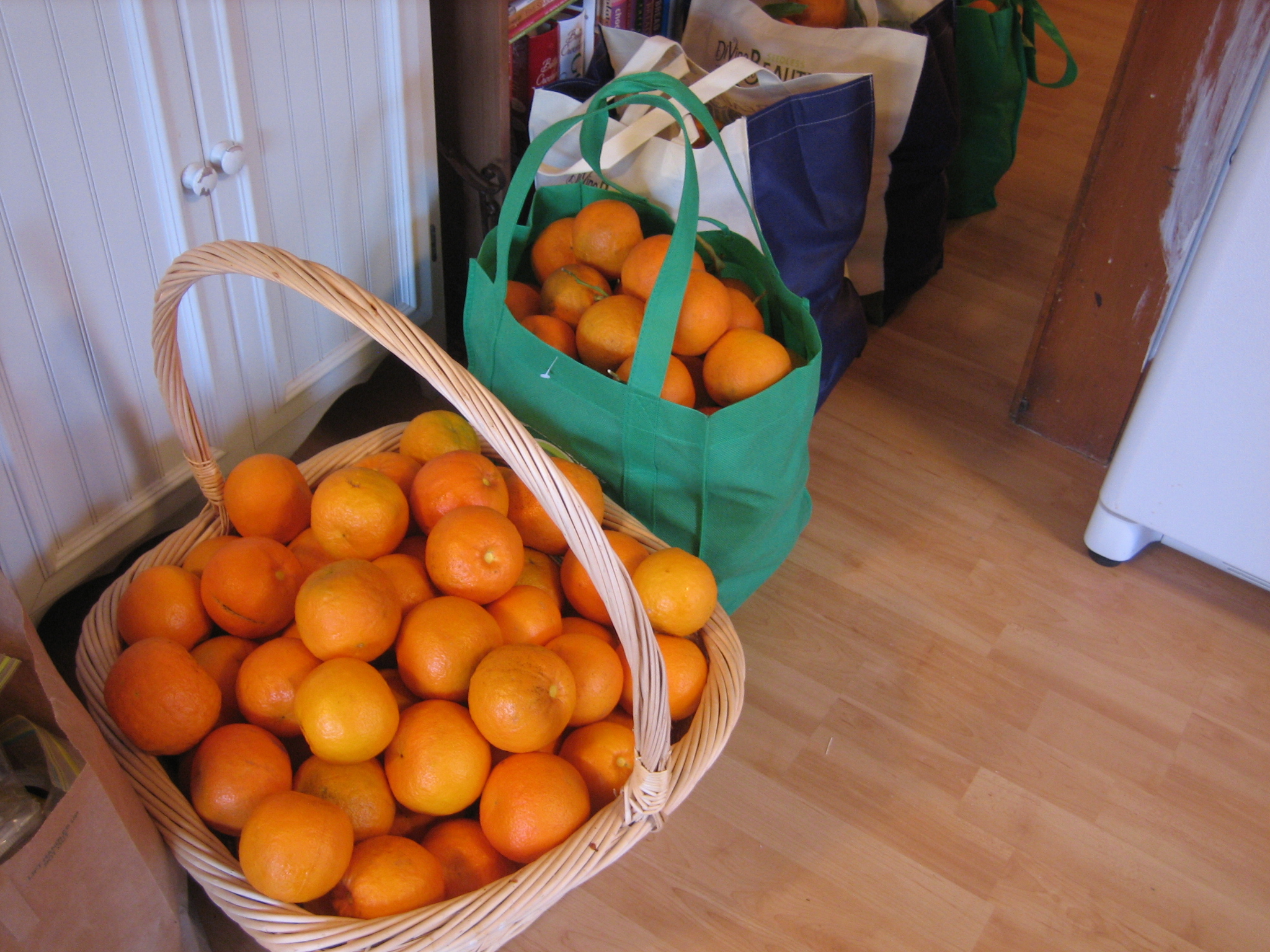
This year the yield was a little thin because of the drought and several freezes that diminished most of Dad’s citrus orchard, but last year the tree yielded nearly 145 pounds of oranges.

The New Year always starts out with a marmalade-making project of massive proportions that takes over my kitchen. It can take up to three months to complete and I’ve worn out at least one juicer in the process. The upside to this chaos is that the whole house smells of fragrant oranges until about March.

Despite being a novice at making marmalade, my first year was a success almost immediately — once I figured out how to get the slivers of peel just right.

The whole process begins with washing the oranges, then juicing and peeling them – in that order. Even though there are no pesticides of any kind, the oranges still manage to attract a fair amount of dirt (way up there in the tree, don’t ask me how) and need a good scrubbing before the peels can be used. I first soak the oranges to loosen the dirt, then use an antibacterial soap and scrub them, rinsing several times, before hand drying them with tea towels to keep them from going bad too quickly. With 145 pounds of oranges, just washing them took several days!

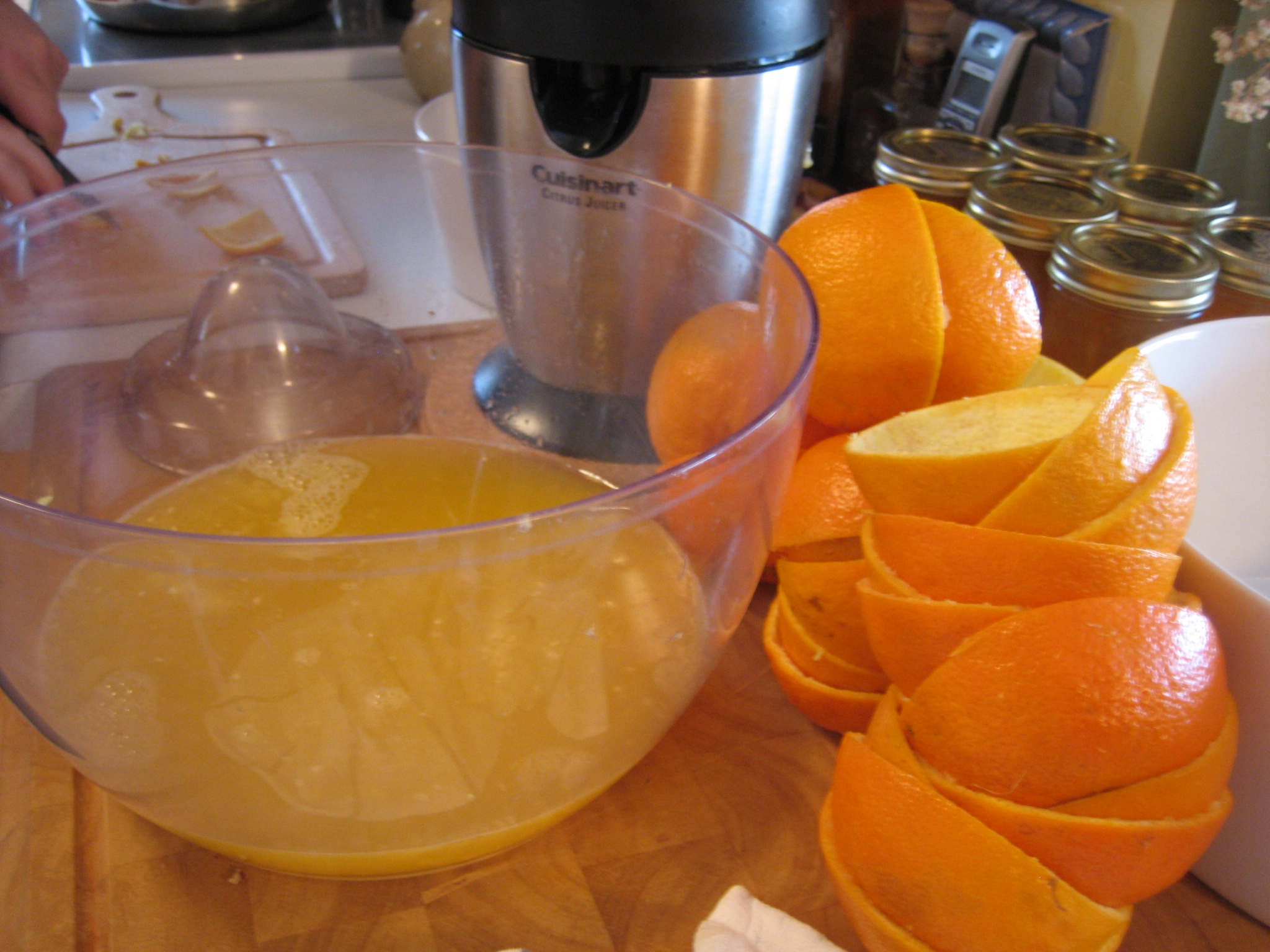
Next, I juiced them. Despite the thick peels and pith, the real weight of the oranges comes from an abundance of juice, so my puny little juicer gets a real workout. There’s a lot of pulp, pith, and seeds to toss as well as the occasional fruit that goes bad too quickly, so the trash fills up quickly with the remains of the innards of the oranges. Storage is also an issue, since the juice needs to be kept until the peels are prepared and ready to be cooked.

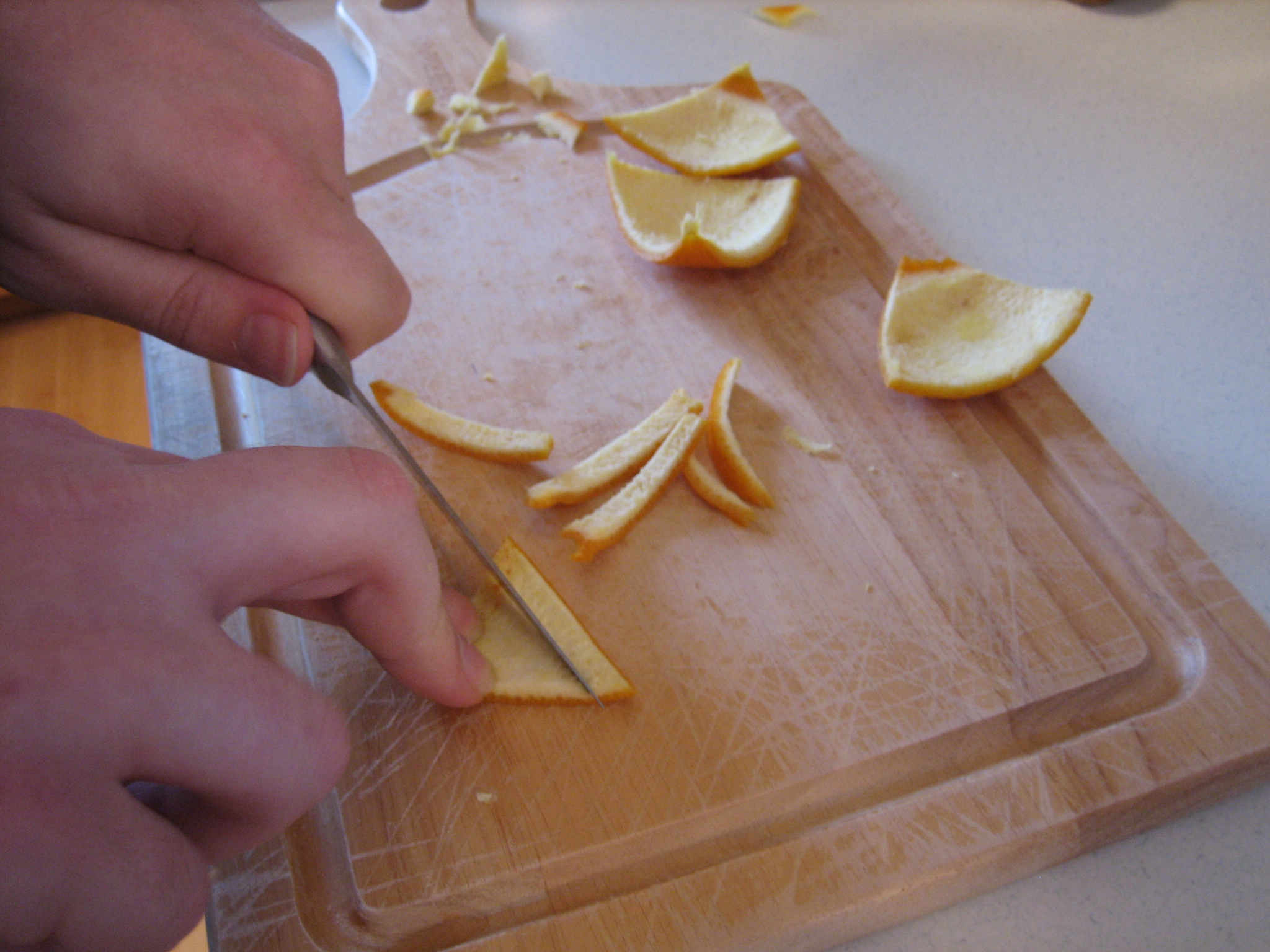
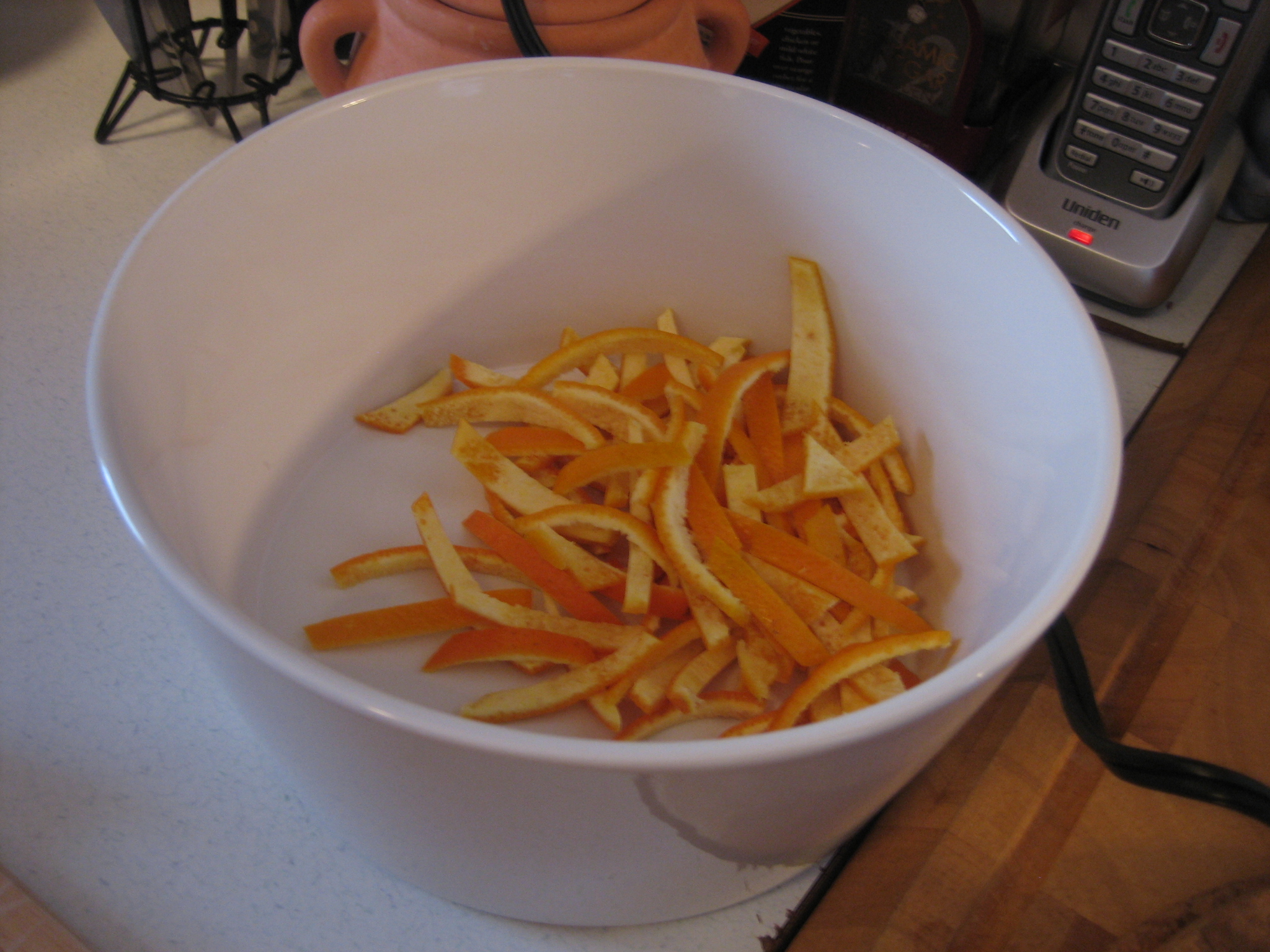
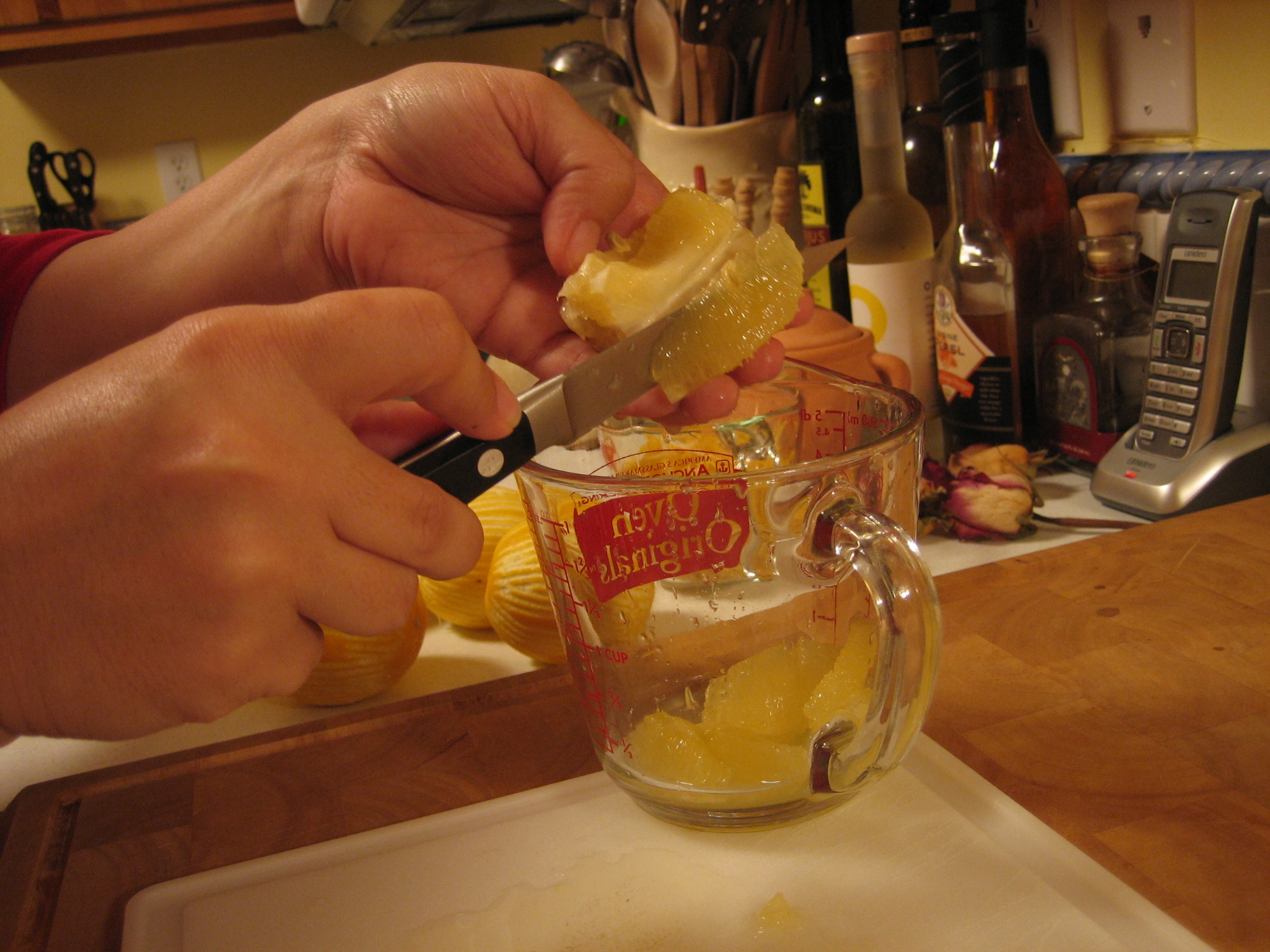
The really labor intensive part of the process comes next – preparing the peels. Frankly, this part took a couple of years of trial and error to get just right. Most folks suggest a sharp peeler to get thin pith-free slivers of peel off the oranges before they are juiced, but I didn’t really like the result: a somewhat tough candied peel. So I came up with a slightly more complex process that seems to result in a better end-product: once the fruit is juiced, I cut the emptied halves into half again and then slide a sharp knife along the flattened inside of the peel, scraping off most – but not quite all – of the pith. Kitchen sheers make quick work of the scraped peels after that. Obviously this takes a while to do and I’ve got to keep the peels moist or they’ll dry out and be hard to scrape and cut. I learned that juicing a few oranges and then preparing their peels right away worked best. The prepared peels also need to be kept in water and soaked and drained a couple of times to remove some of the bitterness. (Overnight for several nights worked best.) This method produces a slightly softer candied peel in the marmalade (especially when you add a pinch of baking soda later to the boiling water) with minimal bitterness and it leaves just enough of the pectin-containing pith intact for jelling the stuff properly with store-bought pectin.
Eventually all the peels are done (whew) and the jelly making can begin. That’s the fun part and it goes really quickly. If I’ve got enough sugar and jars, I can usually get all the juice and peels made into marmalade in a single day!

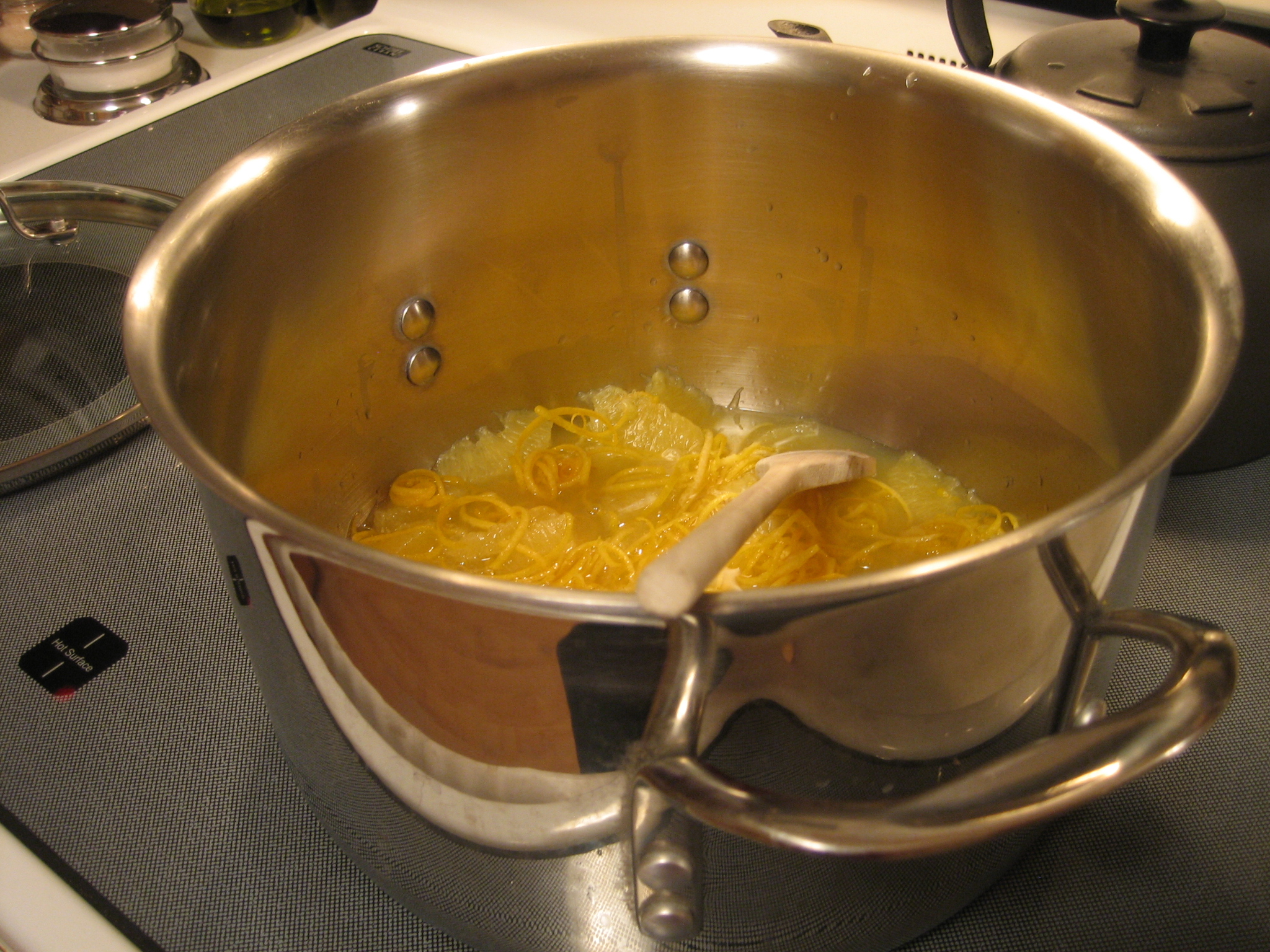
First, I start by boiling the peels. This is to get any remaining bitterness out of them rather than to soften them. To soften the peels, I boil them just once with a bit of baking soda. I found less is more here, since boiling them too long or with too much baking soda can result in mushy peels. It’s an inexact process: I usually have to boil, taste, drain and boil again several couple of times before they have the right taste and texture.

Once the peels are cooked and ready, it’s time to start making the marmalade. Six cups of sugar (yes!), four cups of peels and two cups of juice – that’s the recipe. I combine all but the sugar with one box of pectin and bring it to a rolling boil in the largest pot I’ve got. Then I dump in all the sugar at once and bring that to another rolling boil. At this point the marmalade is something akin to lava, so caution is necessary to avoid any bad burns. I keep it boiling for exactly one minute, then start ladling the liquid and peels into jars. If I’ve got the right balance of fruit, pectin and sugar, it starts firming up right away. If not, the peels float to the top of the jar and it takes a week for the marmalade to semi-set. If it doesn’t set at all, I’ll just recook with another box of pectin and reseal the jars. The taste is a little different if I have to do that, so getting it right the first time is always best.

I skip the processing part, which is when you put the sealed jars back into a boiling water bath for a specified amount of time, but only because I don’t have enough space and or equipment to handle all the jars and because the marmalade keeps pretty well once sealed. Any jars whose lid doesn’t go “pop” to indicate a seal gets stuck in the fridge and used first. Besides, between friends and family the stuff disappears rather quickly.

Last year’s massive haul – nearly 145 pounds of oranges – was used for experimentation. Friends happily volunteered to taste-test from eight different batches to find the perfect one. While peel texture seems to be a personal thing, I did come across one recipe that was universally liked. I also found that the marmalade can be made fairly successfully with the artificial sweetener, Splenda (I wanted to make something my diabetic mother could have) although it came out less sweet, more tart, slightly bitter and very cloudy due to the cornstarch that is blended with the Splenda. I’ll probably experiment with this formula a bit more to get a clearer product (liquid Splenda maybe? Stevia?) and a sweet, less bitter one too.

The marmalade making didn’t end with the oranges. Dad also grows Meyer lemons which made a beautiful marmalade one year. Unfortunately the peels stayed a little tough, so it wasn’t as satisfying to use but, oh my, the jelly was fantastic. I’d be doing that again this year, with improved peel preparation, but the Meyer lemon trees were hit hard by this year’s weather and didn’t produce any fruit. Next year, I hope!
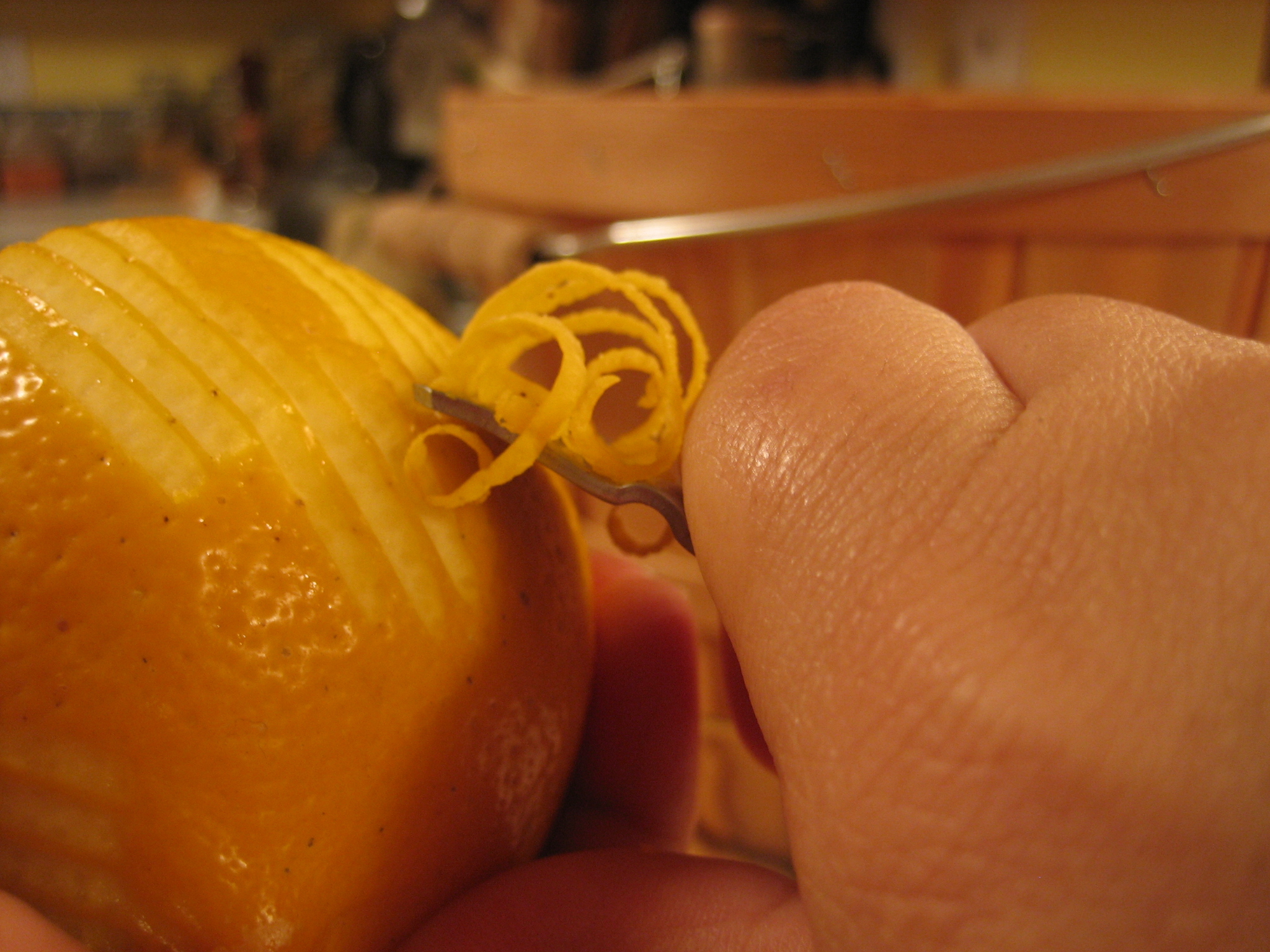
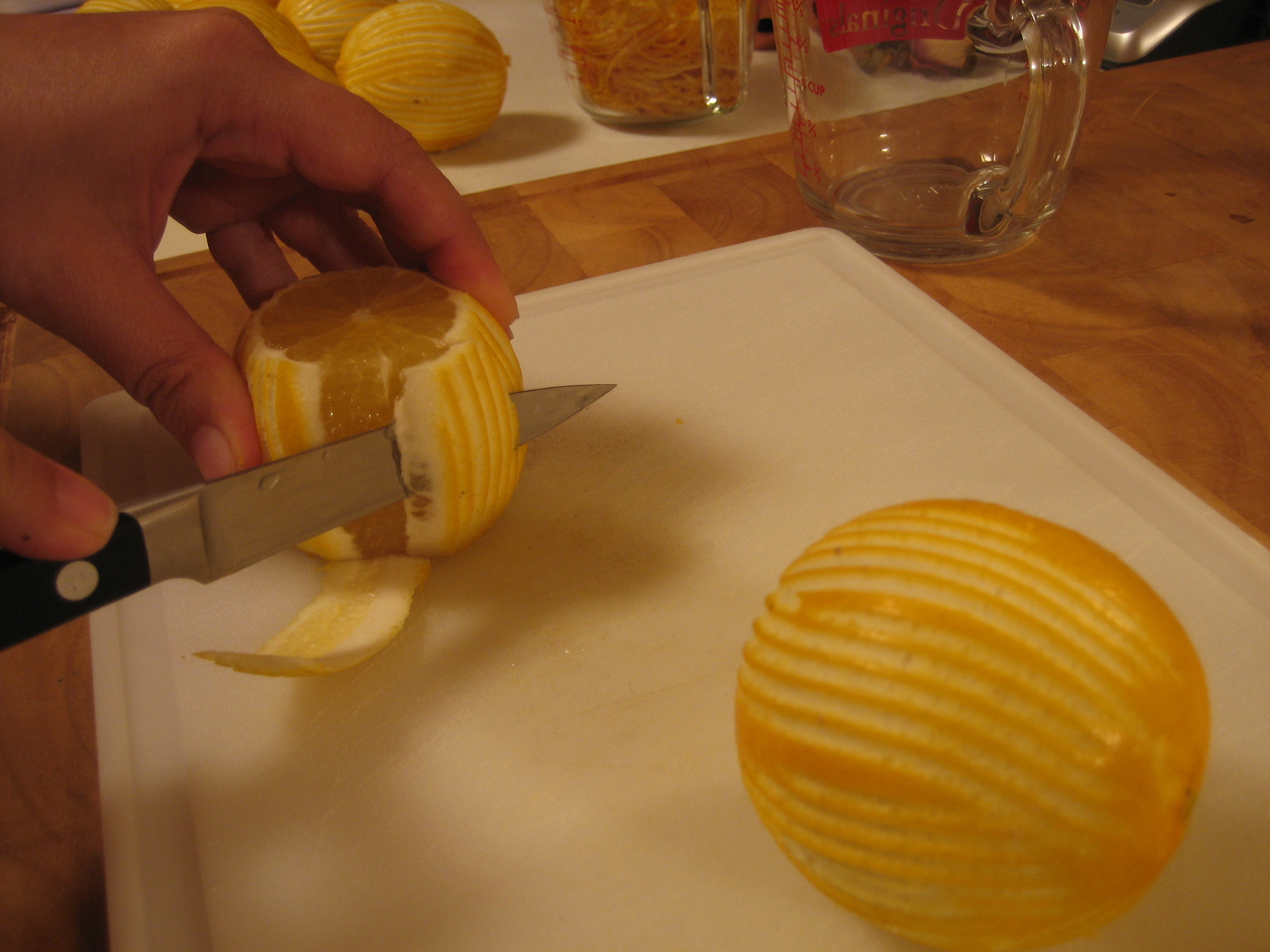
Click here for photos of my Dad’s orchard.

Click here for photos of my marmalade-making process.

One thing I learned from all this? An effort like this requires a great deal of organization, but also a fair amount of patience and hard work. Now wonder it’s usually little old ladies and nuns who make this from scratch.

Baked Salmon

Thursday, May 7th, 2009

I’m being lazy with my blog and just re-posting my recipes for now. I hope you like them!
This one was originally posted on Monday, August 4th, 2003

Baked Salmon

Prep work takes about 10 minutes.

1 one pound salmon fillet (Coho Salmon if you can get it)
2 Tablespoons of a dry white wine
1 teaspoon lime juice
1 Tablespoon olive oil
3/4 teaspoon lemon pepper spice mix
a pinch of kosher salt
3/4 teaspoon dill (dried is fine, fresh would be better)
a few grinds of black pepper
1 shallot, thinly sliced
Preheat the oven to 350.

Drizzle a little of the oil into a shallow baking dish. Wash and pat dry the salmon, then place it in the baking dish. Using small needle-nose pliers, pull out the pin bones. (Run your finger up along the thick part of the meat and you’ll feel them sticking out.)

Carefully pour the white wine and lime juice on top of the fish. Drizzle the rest of the olive oil on top. Sprinkle with lemon pepper spice mix and gently rub the oil and spices into the fish. Sprinkle on the kosher salt, dill weed and a few grinds of black pepper. Lay the shallot slices on top.

Bake uncovered for 20 minutes or until fish flakes easily with a fork.

Slow Cooker Chicken with Garlic Mashed Poatatoes

Friday, May 1st, 2009

Another recipe from the archives.

Originally posted December 15, 2003:

Slow Cooker Chicken with Garlic Mashed Potatoes

This is a recipe that’s best made one day ahead of time. On day one you’ll need:

1 whole chicken
2 yukon gold potatoes
10 or so new potatoes
several pinches of kosher salt
several grinds of black pepper
1/2 teaspoon dried thyme
1/2 teaspoon dried basil
1 tablespoon lemon pepper
1 large handful (several springs) of rosemary

Wash and trim the chicken of any extra fat and remove (and discard) all the innards. Pull back the skin. Cut the yukon gold potatoes in half and arrange all potatoes on the bottom of the slow cooker. Set the chicken on top of them and stuff with the rosemary. Sprinkle salt, pepper, thyme and basil and replace the skin. Sprinkle with the lemon pepper. Cover and cook on low, 6 hours. When cooked, remove chicken to an oven-proof container. Remove potatoes to another container, and drain all the liquid into a third container. Place everything in the refrigerator overnight.

The next day you’ll need:

2 tablespoons butter, divided
1 tablespoon all-purpose flour
1 tablespoon whipping cream
1 cup canned low sodium chicken broth
1 cup of the chicken stock from the previous night (skim the fat off of
the top and discard)
1 teaspoon kosher salt
1 teaspoon white pepper
1 teaspoon garlic powder

Place the chicken in the oven and turn it on to 350 degrees for the chicken to warm up while you prepare the potatoes. Cut all the new potatoes in half and then push all the potatoes through a potatoe ricer into a microwave-proof bowl. (Alternatively you can simply roughly mash them up and leave the skins on, or peel them all and roughly mash them up. Leave chunks.) Heat them in the microwave for three minutes, stirring every minute. In a pan on the stove, heat the other tablespoon of butter and four over medium-low heat until it has a light golden color. Remove from heat and add cream. Stir until it a smooth paste again. Slowly whisk in the chicken stock, then the broth. Remove potatoes from the microwave and sprinkle with salt, pepper and garlic powder and stir. Add one cup of the broth mixture and stir. Add another 1/2 cup or cup, depending on the potatoes and stir. (You want them to be thick and fluffy and not watery.)

Remove the chicken from the oven and enjoy!

Halibut Baked in Grape Leaves

Monday, April 6th, 2009

One afternoon in 2003, while waiting in a Doctor’s office lounge, I came across an intriguing recipe  recipe that suggested wrapping a piece of fish in grape leaves before baking.

I had two enormous jars of grape leaves, packed in acidulous water that I had bought from a Mediterranean grocery store. I’d intended to make dolmas (stuffed grape leaves) but never got around to it, then forgot I had one jar and bought another one! Naturally, when I saw a recipe for baking fish inside a pouch of grape leaves I decided to try it.

It is absolutely fantastic. If you can get grape leaves – fresh or in a jar – I highly recommend this approach; it was quick, easy and absolutely delicious and the fish was moist, tender and full of flavor.

Originally posted Friday, July 8th, 2003:

Halibut Baked in Grape Leaves

You can use just about any fish, but I used halibut as the recipe recommended.

2 boneless/skinless halibut fillets
3 or 4 fresh grape leaves (or 5 or 6 canned/preserved) for each skinless fillet
2 Tablespoons olive oil
2 teaspoons chopped fresh thyme
2 teaspoons kosher salt
1 teaspoon fresh ground black pepper

Preheat the oven to 400 degrees, then lightly oil a baking dish. Lay out the leaves on a cutting board, overlapping them to create an 8 inch round circle. Sprinkle with half the olive oil, the thyme, salt and fresh ground pepper. Place a fillet in the center of the leaves and wrap them around it in a clockwise fashion to close it up. Lay the package, seam side down, into the baking dish and bake for 20 minutes or until the fish is cooked through. (The grape leaves will crisp up.) Carefully transfer to a platter and peel away the leaves.

I cooked mine for twenty minutes, then turned off the oven and let it sit in there until I’d finished some pasta (about another 5 minutes).

The fillets are delicious plain but the recipe also included a fantastic vinaigrette to serve it with:

3 Tablespoons fresh squeezed lemon juice
1 teaspoon dijon mustard
1/4 cup extra virgin olive oil
1 teaspoon chopped fresh thyme
salt and pepper to taste

Blend all ingredients together and pour about a tablespoon or so over each fish fillet

Sweet Potato Pie

Sunday, February 22nd, 2009

Apparently today is “National Cook a Sweet Potato Day” day, according to Foodimentary. In that spirit I offer you my recipe for Sweet Potato Pie. I used a recipe from “The Encyclopedia of American Food & Drink” and added some of my own touches.

Originally posted Friday, October 31, 2003:

Sweet Potato Pie

1 lb sweet potatoes
3/4 c brown sugar
1/4 t salt
1 t ground cinnamon
1/2 t nutmeg
1/4 t ground cloves
3 eggs
3/4 c milk
3/4 c heavy cream
1 T butter
1 pie plate lined with pastry crust (I used Mrs. Smith’s 9″ deep dish home style pie crusts.)

Pre-heat oven to 400 degrees. Poke a bunch of holes in the sweet potatoes with a fork, then microwave on high for 10 minutes. Allow to cool for 5 minutes. Cut in half and scoop out the meat inside into a large bowl and beat till smooth. Blend in the brown sugar, salt and spices. Beat in the eggs, milk and heavy cream and then beat in the butter. Pour into pie crust, leaving about a half inch space from the top. Bake at 400 degrees for about 40-45 minutes or until an inserted toothpick comes out clean.

I think the cream is important and I use one type in all my ice creams and in this pie. It’s a product of Holland, “Dairytime” or “DairyLand” pure cream. Since I get mine from
Phonecia in Houston
it’s got Arabic writing all over it.

Broccoli-Parmesan Pasta

Tuesday, February 17th, 2009

When I saw something like this on FoodTV’s Barefoot Contessa (Brocolli and Bowties from the “Kids in a Candy Store” episode) and decided to make up my own, simpler, variant and give it a try. It’s incredibly simple and, if you use the multicolored rotini, it comes out delightfully colorful. You can also add chicken to this to make it a complete meal.

So, here’s my version:

Broccoli-Parmesan Pasta

1 cup broccoli florets (1 head)
4 handfuls of dry rotini pasta, the colorful kind if possible
2 tablespoons unsalted butter
2 tablespoons extra virgin olive oil
1 tablespoon minced garlic (I use the ready-minced-garlic-in-a-jar for this)
1 tablespoon freshly squeezed lemon juice
1/2 teaspoon freshly ground black pepper
Kosher salt
1 cup freshly grated Parmesan

Steam the broccoli for 10 minutes – or until just tender (don’t overcook). Place in a large bowl and set aside.

Meanwhile, in another very large pot, boil a large amount of water, salt well, then add pasta and cook until tender (about 10 minutes, see tip below). Drain and add to the broccoli in the large bowl.

In a small saute pan, heat the butter and oil over medium-low heat until butter is melted. Add minced garlic and cook for 2-3 minutes, letting the butter brown, but not burn. Remove from the heat and add the lemon juice. Pour this over the broccoli and pasta, sprinkle with salt and pepper. Add grated parmesan and toss well.

It’s very important to use a large amount of water and salt the water WELL (if it tastes like seawater it’s great) when you cook pasta. Try it sometime – boil some pasta in just enough plain water to cover it, then cook the same kind of pasta in another pot with triple the amount of water and a few tablespoons of salt. Drain, rinse and taste ‘em. Big diff.

Recipe: Coconut-Steamed Mussels

Thursday, February 12th, 2009

Another recipe from the vault:

Original posted Monday February 10, 2003:

mussels1

Coconut-Steamed Mussels

1 tablespoon olive oil
1-2 cloves garlic, minced
1/2 shallot, chopped
3/4 cup water
1/4 cup white wine
1/2 cup canned coconut milk
1 teaspoon salt
1/4 teaspoon red pepper flakes
a pinch of kosher salt
1 pound mussels
a few grinds of fresh black pepper

In a large pot, heat the olive  oil over medium-high heat. Add the garlic and cook for 3 minutes. Add the  water, wine and coconut milk. Bring to a boil. Add salt and red pepper  flakes. Insert a steamer basket and add the mussels. Cover and steam for 6  minutes. Remove mussels to a lareg bowl, discarding any that haven’t  opened. Add black pepper to broth and pour over mussels. Garnish with  chopped cilantro.

Enjoy!

mussels2

Recipe: Whole Slow Cooked Chicken, Chicken Stock, Chicken Soup

Wednesday, January 28th, 2009

So many of the people I know online seem to be succumbing to a 24 hour bug that I thought it would be appropriate to repost my expereince with making chicken stock and chicken soup.

Originally posted, July 12, 2002:

I am so proud of myself.

Yesterday I made some scrumptious blueberry muffins and a chicken and potato dish. Yum. Today I made a soup from scratch; I’d just bought some yummy veggies and wondered what to do with ‘em. Yes, I made it up – no recipe or anything! Actually I had been reading several dozen soup recipes the day before, so I guess I just figured out the “soup basics”.

It turned out perfect.

I started with one bunch (with the leaves all still on) of smallish organic carrots. Small and expensive, but wow – what flavor! Well worth the expense. I chopped them up into smallish bits, then diced a clove of garlic and two medium stalks of celery (after I’d peeled all the tough strings out of the celery) into same size smallish bits. Note, peeling out those tough strings made a huge difference. It was a bit of extra work, but worth it in the end.

I then sauteed the veggies in olive oil very briefly – just 3 to 5 minutes – and added about six roughly chopped mushroom caps (no stems). I also chopped the white ends of green onions (about six smallish ones) and added those and a tiny bit of water. I let that saute for another 5 minutes or so.

Next I added about 4 cups of water and three chicken bouillon cubes. (I was out of chicken stock.) I also chopped up the two chicken breasts I had left over from the previous night’s dinner (they’d already been baked with tarragon, thyme and rosemary before) into medium chunks and added those and a half can of (drained) “toovar liva”, otherwise known as Indian bean seeds. (They’re like a firm and smallish black-eyed pea. Lentils or some other smallish bean would substitute nicely.)

Then I tossed in some seasonings: sea salt, onion powder, black pepper, basil, tarragon, lemon pepper, sesame seeds, and about ten dashes of white wine vinegar.

Finally I added a couple of handfuls of egg noodles, lowered the heat a bit and simmered the whole schemer (covered) for about ten or so minutes.

Yum!

Originally posted April 14, 2003:

Sometimes I want to make something really good and home cooked, but not  put a lot of effort into it. This slow cooked chicken is really easy and you get a lot of mileage (chicken dinner, stock and soup) out of one chicken.

Whole Slow Cooked Chicken:

First thing you need is a slow cooker. Most of the models available now have an integrated timer, but if you have an older model you can buy adapters that will give them the same ability.

Take a whole chicken and get rid of the skin and any stuff left inside. I’ll often trim off a lot of the fat too, then rinse the bird. Cut a large yellow onion into big quarters and stuff that inside of the bird with a few springs of rosemary. Place inside the slow cooker, on top of a small rack (if you’ve got one for the cooker). Sprinkle a lemon pepper spice mix all over the chicken and set to the lowest setting for about 6 hours.

You can set the whole chicken ontop of several potatoes in leiu of a rack. This has the added bonus of infusing the potatoes with chickeny goodness. With a little butter and milk or cream they make excellent mashed poattoes.

After dinner I’ll strip the chicken of the meat and and save both that and the carcass (onions and everything) in separate containers in the fridge. I can use some of the chicken for dinner the next night or keep it for soup.

Chicken Stock:

The next day, or immediately after trimming the chicken and putting the meat in the fridge, place the carcass (bones and all the trimmings.) Fill with water enough to just cover and then set your slower cooker on the highest setting.

You’ll notice a huge difference in the bones after three hours and if you let it go long enough they’ll start to disintegrate. When you’re ready, just strain the whole thing through a cheesecloth into a container and refrigerate. The next day you’ll be able to lift off any remaining fat off the top of the stock. (It’ll be a solid layer on top.)

Voila. You’re ready for chicken soup.

Hearty Chicken Soup:

This one does take a little more prep, but it’s still pretty quick.

Take three stocks of celery from a bunch and chop them up into small cubes. I de-string the stuff first, then cut them into strips and chop to get the nice cubed look. Take three or four carrots, peel ‘em with a potato peeler and chop them up into similarly sized bits. Dice one clove of garlic.

In a large pot over high heat, add your home-made chicken stock and a bay leaf (or two) plus 4 to 6 chicken bouillon cubes.

In a saute pan, add a small amount of olive oil and the garlic. Cook for a minute or two. Add the celery and carrots and sprinkle with salt. Cook two or three minutes max.

Scrape all the veggies into the chicken stock and bring to a boil. Add small (not wide) egg noodles and cook until almost done.

Roughly chop up the leftover chicken (don’t get it to small) and add to the soup when the noodles are almost done. Add some lemon pepper spice to taste (and for a nifty touch toss in a handful of sesame seeds) or, alternatively, season with cumin and allspice. Cook  until noodles are done and the chicken is heated through.

Enjoy!

Recipe: Dilled Tilapia and Zucchini CousCous

Thursday, January 22nd, 2009

I tweeted about a successful culinary adventure yesterday and was promptly asked for the recipes. Here they are! (The fish is my dad’s own recipe, and the zucchini is mine, so this is the first time they’ve been written down.)

Dilled Tilapia

4 frozen tilapia fillets
1 teaspoon salt
1 tablespoon onion powder
1 tablespoon garlic powder
2 tablespoons dried dill weed
4 tablespoons olive oil

Lay the fillets on a microwave-safe plate. Zap the four fillets in the microwave for just 40 seconds or less – enough to make them slightly moist, but still frozen. Sprinkle one side with half the spices. Heat the olive oil in a non stick frying pan over high heat. Add the fillets, spiced side down. Sprinkle the remaining spices on the other side of the fillets. Reduce heat to medium-high. Cook for three minutes. Turn fillets over. (Add some olive oil if necessary.) Cook for six minutes. Turn over once more and cook for an additional two to three minutes. Remove from heat and serve.

Couscous with zucchini

A pinch of saffron
2 tablespoons hot water
3 medium zucchini, cubed (about 1/2 square chunks)
2 tablespoons olive oil
1 teaspoon garlic powder
1 tablespoons onion powder
salt and fresh ground black pepper to taste
3/4 cup couscous (for a really nice look, use the multicolored couscous)
1 cup boiling water

Soak the saffron threads in the hot water. Heat olive oil in a shallow saucepan (that has a tight fitting lid) on high until zucchini sizzles when dropped into it. Reduce heat to medium and toss in all the zucchini. Cook until just slightly translucent, but still a bit firm. Add spices and toss well. Add the saffron-infused water and the boiling water. Cover with lid and let sit for 15 minutes. Fluff with a fork.

Repost – Kemah Taco

Wednesday, January 7th, 2009

Originally posted September 12, 2002:

Kemah Taco

1 lb ground beef
1 package frozen peas
1 tablespoon each: ginger, cumin, garlic, onion powder
1 teaspoon each: salt, black pepper
1 tablespoon tomato paste

Toppings:
green olives, sliced
shredded cheddar cheese
plain yogurt

Small (6″) tortillas

Brown the ground beef in a medium saucepan over medium heat. Add the spices and incorporate thoroughly. Add the frozen peas and cook until they are no longer frozen. Add the tomato
pesto, stir through throughly and remove from heat.

Warm the tortillas ( I usually zap in a microwave for a couple of seconds).  Add the shredded cheese and sliced olives. Spoon on the meat mixture, then top a dollop of yogurt. Roll up like a burrito and enjoy!